
Skyroot Makes History: India's First Private Orbital Rocket Launch
Skyroot Aerospace's Vikram-1 achieved India's first private orbital launch, validating space-sector reforms and signaling a maturing ecosystem for deep tech and space ventures.
Skyroot Makes History: India's First Private Orbital Rocket Launch
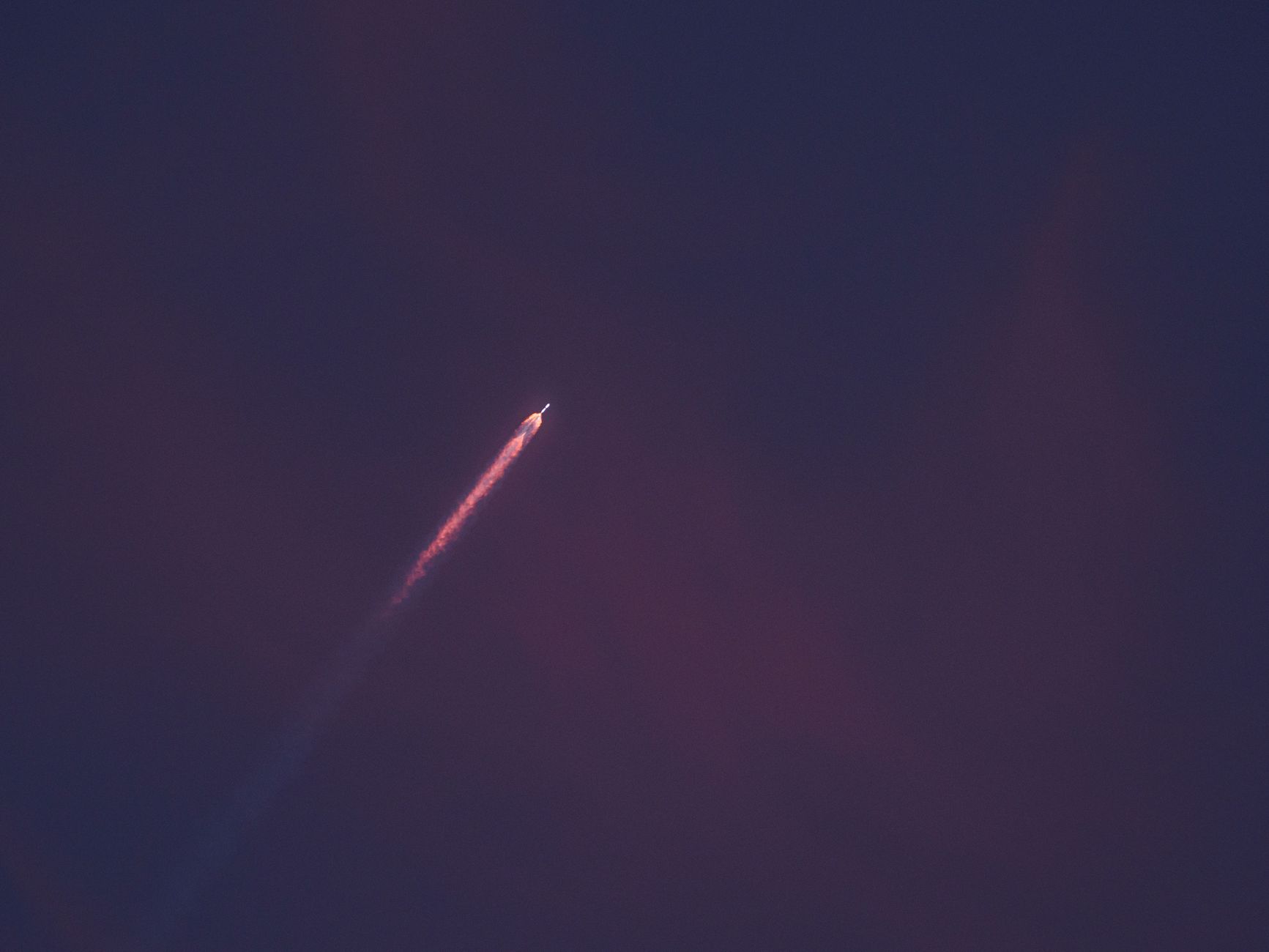
Skyroot Aerospace successfully launched its Vikram-1 orbital rocket in July 2026, marking India's first private orbital space launch. This achievement signifies a pivotal moment for the nation's private space industry, validating recent space-sector reforms and showcasing India's burgeoning entrepreneurial spirit in advanced technology. For founders in deep tech and space ventures, this event signals a maturing ecosystem and the tangible benefits of government support for private enterprise in capital-intensive sectors.
Quick takeaways:
- Skyroot Aerospace's Vikram-1 conducted India's first private orbital launch in July 2026, deploying payloads into a 500 km low-Earth orbit.
- The mission, named 'Gaayatri', carried student-built satellites and an experimental payload, demonstrating a collaborative approach within the burgeoning Indian space sector.
- This success validates India's space-sector reforms, highlighting the critical role of support from entities like ISRO and IN-SPACe in fostering private innovation.
- Skyroot, which previously executed a sub-orbital launch in 2022 and has raised over $100 million, exemplifies the trajectory for deep tech startups securing significant capital for complex engineering challenges.
- The use of advanced technologies like 3D-printed liquid propulsion engines and all-carbon fiber structures in Vikram-1 points to the technological sophistication now accessible to private players.
The Historic Liftoff
Skyroot Aerospace initiated a new era for India's space ambitions in July 2026 with the successful launch of its Vikram-1 orbital rocket. The mission, designated 'Gaayatri', lifted off from the Satish Dhawan Space Centre (SDSC) in Sriharikota, a site historically associated with India's national space agency. This event marked India's first private orbital space launch, a significant technical and commercial milestone YourStory, 2026. The Vikram-1 successfully placed its payloads into a precise 500 km low-Earth orbit, demonstrating the rocket's capability to meet commercial deployment requirements YourStory, 2026.
The mission carried three distinct payloads, showcasing the collaborative and educational spirit fostered within India's evolving space ecosystem. Among these were student-built satellites, 'Shunya Labs' and 'Pratham', highlighting the involvement of academic institutions and emerging talent in space exploration. Additionally, an experimental payload from 'SpaceKidz India' was on board, further emphasizing the access now afforded to various private and educational entities within the space sector YourStory, 2026. This multi-payload approach not only maximized the utility of the launch but also underscored the growing demand for dedicated and rideshare launch services for smaller satellites.
Technologically, Vikram-1 represents a leap in indigenous space engineering. The rocket incorporates 3D-printed liquid propulsion engines, such as the Dhawan-1 engine, which are critical for reducing manufacturing complexity, lead times, and overall costs associated with rocket production Inc42, 2026. The use of an all-carbon fiber structure further enhances the rocket's performance by significantly reducing its dry mass, allowing for a greater payload capacity. With a stated payload capacity of 480 kg to a 500 km LEO, Vikram-1 positions Skyroot Aerospace as a viable provider for small satellite launch services, a rapidly expanding segment of the global space market Inc42, 2026. This successful launch demonstrates that private Indian companies can now design, build, and operate advanced orbital launch vehicles, opening new avenues for commercial space activities and validating the significant investments made by founders like Pawan Kumar Chandana and Naga Bharath Daka in deep tech.
Validating India's Space Reforms
The successful orbital launch of Vikram-1 by Skyroot Aerospace is a direct validation of India's strategic space-sector reforms, which aimed to open the traditionally state-dominated industry to private enterprise. For founders across India, this event provides tangible evidence that government policies can indeed foster innovation and enable the creation of high-tech, capital-intensive ventures. The reforms, initiated in recent years, sought to leverage the agility and efficiency of the private sector to accelerate India's presence in the global space economy. Skyroot's achievement underscores the potential for a symbiotic relationship between public space agencies and private companies, demonstrating how regulatory support can translate into operational success.
Crucially, the mission received support from key governmental and regulatory bodies, including the Indian Space Research Organisation (ISRO) and the Indian National Space Promotion and Authorisation Centre (IN-SPACe) YourStory, 2026. ISRO, the nation's premier space agency, provided its infrastructure and expertise, which is invaluable for a nascent private launch provider. This collaboration indicates a shift from a monopolistic state-run model to a more collaborative ecosystem where ISRO acts as a facilitator and enabler for private players. For founders, this means that deep tech ventures, particularly those requiring significant infrastructure and regulatory clearances, can expect a supportive, rather than prohibitive, environment. It de-risks entry into complex sectors by providing access to established resources and regulatory guidance.
IN-SPACe's role as an independent nodal agency to promote, enable, and regulate private sector participation in space activities was particularly vital. Its involvement streamlined the necessary approvals and ensured compliance, allowing Skyroot to focus on its core engineering and operational challenges. This institutional backing is a critical lesson for any founder operating in a regulated or high-barrier-to-entry industry: understanding and engaging with the regulatory framework and its supporting bodies can be as important as the technological innovation itself. The success of Vikram-1 sends a clear message to potential investors and entrepreneurs: India's private space sector is not just a theoretical concept, but a vibrant and supported reality with concrete achievements. This validation could spur further investment into other deep tech areas, from advanced manufacturing to biotechnology, where government backing and regulatory clarity are paramount for commercial viability and scale. The ability for a private entity to launch from a national space centre like SDSC further cements the integration of private players into the national space infrastructure, a model that other nations are also pursuing to accelerate their space capabilities.
Skyroot's Trajectory: From Sub-orbital to Orbit
Skyroot Aerospace's journey to orbital launch with Vikram-1 is a testament to a deliberate, phased development strategy, a model that offers valuable insights for founders in any complex engineering domain. The company, co-founded by Pawan Kumar Chandana and Naga Bharath Daka, did not leap directly to orbital capabilities. Instead, it pursued a methodical approach, beginning with sub-orbital flights to validate its core technologies and operational procedures. This strategy culminated in India's first private sub-orbital launch, Vikram-S, under the mission name 'Prarambh', in November 2022 Inc42, 2026. This initial success provided critical flight heritage, gathered invaluable data, and built confidence among engineers, investors, and regulatory bodies.
The transition from sub-orbital to orbital capabilities represents a significant engineering and financial hurdle. A sub-orbital flight, while challenging, does not require the sustained power, precision guidance, and thermal management necessary to achieve and maintain orbit. For Skyroot, this meant scaling up engine performance, refining guidance systems, and developing robust structures capable of enduring the extreme forces of an orbital trajectory. This iterative development process, building upon smaller successes, minimizes risk and optimizes resource allocation, offering a blueprint for other deep tech startups navigating complex product development cycles. The company’s ability to move from a sub-orbital demonstrator to a full orbital launch vehicle in less than four years underscores its execution capabilities and the pace at which private innovation can advance.
To fuel this ambitious development, Skyroot Aerospace has successfully raised over $100 million in funding Inc42, 2026. This substantial capital infusion highlights the significant financial commitment required for deep tech ventures in the space sector. For founders, Skyroot's fundraising success demonstrates the importance of articulating a clear technical roadmap, demonstrating early traction (like the Vikram-S launch), and tapping into a growing investor appetite for disruptive technologies. The capital has been instrumental in scaling research and development, building manufacturing capabilities, and attracting top engineering talent. Such funding rounds are not merely financial transactions; they are votes of confidence in the company's vision, technology, and execution capabilities, enabling the transition from concept to operational reality. Skyroot’s trajectory illustrates that even in capital-intensive industries, a compelling vision combined with incremental technical achievements can unlock significant investor backing, propelling a startup from foundational stages to market-defining achievements.
The Emerging Private Space Ecosystem
Skyroot Aerospace's orbital success is not an isolated event but a critical accelerant for India's burgeoning private space ecosystem. This achievement signals to other founders that the barriers to entry in deep tech, particularly space, are lowering, creating opportunities across a spectrum of related industries. The ecosystem is characterized by a growing number of startups focusing on various segments, from launch vehicles and satellite manufacturing to ground segment services and space-based data analytics. The validation provided by Vikram-1 is likely to inspire further entrepreneurial ventures and attract more domestic and international investment into this sector.
Within India, Skyroot is part of a cohort of innovative companies pushing the boundaries of private space. Agnikul Cosmos, for instance, is another notable player in the launch vehicle segment, developing its own small satellite launch vehicle. While their specific launch status is not detailed here, their presence as a recognized entity underscores the competitive and dynamic nature of the Indian private space industry. For founders, this competition is healthy, driving innovation and efficiency, and expanding the overall market. The differentiation among these players often lies in their propulsion technologies, manufacturing processes (e.g., extensive use of 3D printing), and target payload capacities, creating specialized niches within the broader launch market.
The market gap that companies like Skyroot are addressing is the growing demand for reliable, cost-effective, and flexible small satellite launch services. As the cost of building satellites decreases and their capabilities increase, a proliferation of cubesats, nanosats, and microsats is expected for various applications—from Earth observation and telecommunications to scientific research and IoT connectivity. Traditional large launch providers often offer rideshare opportunities, but these come with schedule constraints and limited orbital flexibility. Dedicated small satellite launchers, like Vikram-1, offer tailored launch windows and precise orbital insertion, which are crucial for many commercial and governmental clients. This market dynamic creates a significant opportunity for agile startups to capture market share by offering specialized services that cater to the evolving needs of the satellite industry.
The traction signals from Skyroot's success extend beyond launch services. The capability to launch satellites independently fosters an environment for companies specializing in satellite manufacturing, component development, and downstream data applications. For instance, the deployment of student-built satellites 'Shunya Labs' and 'Pratham' and an experimental payload from 'SpaceKidz India' on Vikram-1 demonstrates an immediate customer base and the potential for a robust supply chain to develop around these new launch capabilities YourStory, 2026. This creates a multiplier effect, where success in one segment of the space value chain stimulates growth in others, forming a comprehensive and self-sustaining private space ecosystem in India. Founders looking to enter the space sector can learn from Skyroot's focus on a clearly defined market need and its strategic positioning within a supportive national framework.
Technological Edge and Future Implications
The Vikram-1 rocket's technological underpinnings are central to Skyroot Aerospace's success and offer a glimpse into the future of space launch technology. The reliance on 3D-printed liquid propulsion engines, such as the Dhawan-1, signifies a paradigm shift in rocket manufacturing Inc42, 2026. Additive manufacturing allows for the creation of complex engine geometries that are difficult or impossible to achieve with traditional methods. This leads to integrated components, fewer weld lines, reduced part counts, and ultimately, lighter and more reliable engines. For founders, this highlights the transformative potential of advanced manufacturing techniques in industries previously dominated by conventional, labor-intensive processes. It drastically cuts down development and production timelines, reduces costs, and enables rapid iteration of designs—all critical advantages for startups competing with established giants.
Beyond the engines, Vikram-1’s all-carbon fiber structure is another key technological differentiator Inc42, 2026. Carbon fiber composites offer an exceptional strength-to-weight ratio compared to traditional metallic structures. This weight reduction directly translates to a greater payload capacity or improved performance for a given rocket size. For a small satellite launch provider like Skyroot, maximizing payload to orbit is paramount for commercial viability. The adoption of such advanced materials signifies a commitment to cutting-edge engineering and positions Skyroot at the forefront of lightweight rocket design. This material science expertise is transferable to other high-performance engineering sectors, potentially fostering innovation in aerospace, automotive, and defense industries within India.
The future implications of Skyroot’s achievement are far-reaching for India's technological landscape and its standing in the global space economy. This successful orbital launch demonstrates India's capability to not only develop advanced space technologies but also to commercialize them effectively through private enterprise. It positions India as a significant player in the global small satellite launch market, potentially attracting international clients seeking reliable and flexible launch services. For other founders, this success story illustrates that investing in deep tech, even with its inherent risks and capital requirements, can yield substantial returns and national recognition. The lessons learned in rocket design, manufacturing, and operational efficiency by Skyroot will undoubtedly cascade through the Indian engineering talent pool, fostering a new generation of skilled professionals and entrepreneurs.
Furthermore, the operational success of Vikram-1, placing payloads into a 500 km LEO, unlocks possibilities for more frequent and diverse missions YourStory, 2026. This could include dedicated launches for constellations of communication or Earth observation satellites, further contributing to India’s digital infrastructure and data economy. The ability to launch student-built satellites also nurtures STEM education and encourages young talent to pursue careers in space and related high-tech fields, creating a sustainable pipeline for future innovation. Skyroot’s journey from a sub-orbital test to a full orbital launch in a relatively short period, backed by over $100 million in funding, serves as a powerful case study for how ambition, technological prowess, and strategic capital can converge to establish market leadership in a critical, high-growth sector Inc42, 2026.
FAQ
Q: What was the significance of Skyroot Aerospace's Vikram-1 launch? A: The Vikram-1 launch in July 2026 marked India's first private orbital space launch, signifying a pivotal moment for the nation's private space industry. It validated recent space-sector reforms and showcased India's entrepreneurial spirit in advanced technology YourStory, 2026.
Q: What payloads did the Vikram-1 mission carry? A: The 'Gaayatri' mission carried three payloads: student-built satellites 'Shunya Labs' and 'Pratham', and an experimental payload from 'SpaceKidz India' YourStory, 2026. These payloads were successfully placed into a 500 km low-Earth orbit YourStory, 2026.
Q: What advanced technologies were used in the Vikram-1 rocket? A: Vikram-1 utilizes 3D-printed liquid propulsion engines, such as the Dhawan-1 engine, which enhance manufacturing efficiency and reduce costs. It also features an all-carbon fiber structure, contributing to its lightweight design and a payload capacity of 480 kg to a 500 km LEO Inc42, 2026.
Q: How has Skyroot Aerospace been funded? A: Skyroot Aerospace has successfully raised over $100 million in funding to support its ambitious development and operational goals Inc42, 2026. This capital has been crucial for advancing its rocket technology from sub-orbital to orbital capabilities.
Q: What role did government agencies play in Skyroot's success? A: ISRO and IN-SPACe played crucial roles in supporting Skyroot's mission, providing necessary infrastructure, expertise, and regulatory clearances. This collaboration highlights the government's commitment to fostering a private space ecosystem in India YourStory, 2026.
Reader questions.
About “Skyroot Makes History: India's First Private Orbital Rocket Launch” — five of the most-asked, in the desk's own words.
01What was Skyroot Aerospace's historic achievement?
Skyroot Aerospace successfully launched its Vikram-1 orbital rocket in July 2026, marking India's first private orbital space launch. This pivotal event deployed payloads, including student-built satellites, into a 500 km low-Earth orbit, demonstrating India's burgeoning private space capabilities.02What is the significance of the Vikram-1 launch for India's space industry?
The Vikram-1 launch signifies a pivotal moment for India's private space industry, validating recent space-sector reforms and showcasing the nation's entrepreneurial spirit in advanced technology. It signals a maturing ecosystem and the tangible benefits of government support for private enterprise.03What advanced technologies were used in the Vikram-1 rocket?
Vikram-1 incorporates advanced technologies like 3D-printed liquid propulsion engines, such as the Dhawan-1, which reduce manufacturing complexity and costs. It also features an all-carbon fiber structure, enhancing performance and payload capacity. These innovations highlight the sophistication accessible to private players.04How did government bodies support Skyroot's mission?
The mission received crucial support from governmental and regulatory bodies, including the Indian Space Research Organisation (ISRO) and the Indian National Space Promotion and Authorisation Centre (IN-SPACe). ISRO provided its infrastructure and expertise, demonstrating a collaborative ecosystem where public agencies enable private innovation.05What payloads did the Vikram-1 mission carry?
The 'Gaayatri' mission carried three distinct payloads: student-built satellites 'Shunya Labs' and 'Pratham', highlighting academic involvement, and an experimental payload from 'SpaceKidz India'. This multi-payload approach underscored the growing demand for dedicated and rideshare launch services for smaller satellites.