
Europe's First Public Quantum Company IPOs With Future Uncertainty
IQM, Europe's first public quantum company, approaches its IPO, with leadership transparently acknowledging quantum technology's uncertain future, a critical lesson for deep tech founders.
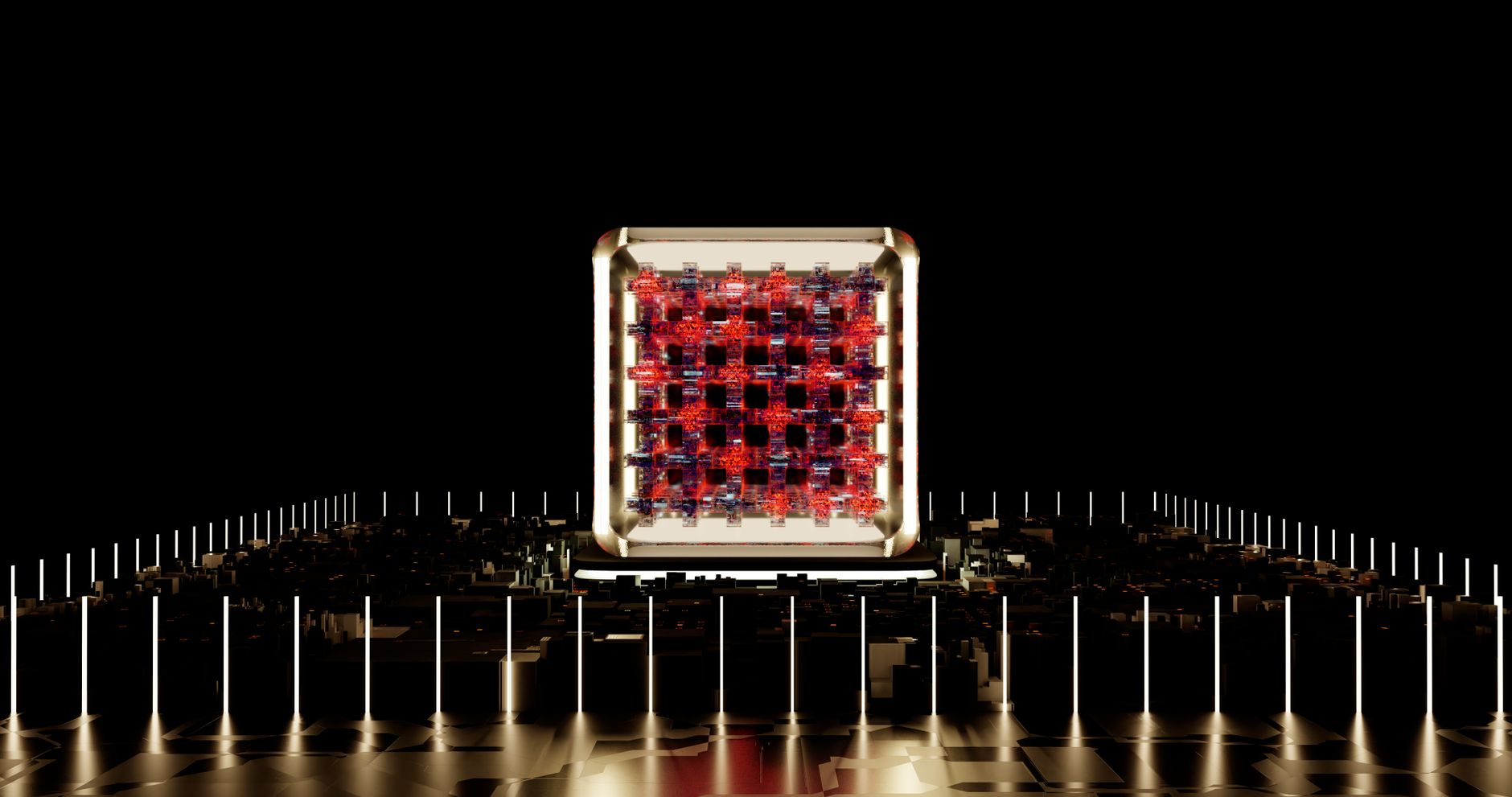
While a future-dated report TechCrunch, 2026 anticipates IQM, a European quantum computing firm, becoming the continent's first public quantum company by July 2026, its leadership has already candidly acknowledged the profound uncertainty surrounding the technology's commercial future. This anticipated market debut and the company's transparent stance offer a critical lesson for deep tech founders: navigating the chasm between market hype and the arduous realities of nascent technology development is paramount for long-term viability. IQM, currently a privately held entity, exemplifies the delicate balance required to secure substantial private funding while managing the high-stakes, long-term nature of breakthrough scientific endeavors.
Quick takeaways
- Deep Tech's Long Horizon: Quantum computing, as exemplified by IQM, operates on a timeline of years, if not decades, for widespread commercial application, demanding patient capital and sustained R&D.
- Candor Over Hype: IQM's leadership openly discussing technological uncertainty sets a precedent for deep tech founders to manage investor and public expectations realistically.
- Strategic Capital Mix: Beyond traditional venture capital, securing government funding and participating in national initiatives is crucial for capital-intensive, strategically important technologies.
- Focused Development: While the ultimate goal is universal quantum computing, IQM's co-design approach targets near-term, application-specific use cases to demonstrate value and sustain development.
- Building European Champions: IQM's growth and involvement in regional quantum programs highlight the ambition to foster indigenous technological leadership in critical future industries.
The Quantum Computing Landscape: Hype Versus Reality
The quantum computing industry operates in a unique space, characterized by both immense promise and significant technical hurdles. Companies like IQM are at the forefront of this nascent field, working to translate theoretical physics into commercially viable hardware and software. However, the path is anything but straightforward. The broader industry understands that fault-tolerant universal quantum computers, capable of solving problems intractable for even the most powerful supercomputers, are still years, if not decades, away from widespread commercial application McKinsey & Company, 2024. This reality creates a fundamental tension between the need to attract substantial investment and the honest assessment of technological readiness.
IQM, headquartered in Espoo, Finland, since its founding in 2018, is one of Europe's leading players in this domain, specializing in building quantum computers based on superconducting circuits IQM Quantum Computers, N/A. This specific approach to quantum hardware development requires intricate engineering, extreme cryogenic environments, and continuous innovation in materials science and control systems. The company offers both on-premise deployment of its quantum computing systems for dedicated research and development, and cloud access, aiming to make its capabilities accessible to a broader range of users IQM Quantum Computers, N/A. This dual strategy underscores the current stage of the industry: a blend of foundational research and early-stage application exploration.
The challenge for deep tech founders in this environment is profound. Investors, particularly those in the venture capital space, typically seek clear pathways to market, scalable business models, and relatively short returns on investment. Quantum computing, by its very nature, defies many of these traditional expectations. It demands patient capital, a tolerance for high risk, and an understanding that the payoff, while potentially transformative, is distant. IQM's strategy involves a co-design approach, focusing on application-specific quantum computers that can address near-term use cases in fields such as materials science, drug discovery, and finance IQM Quantum Computers, N/A. This pragmatic focus helps bridge the gap between long-term vision and immediate utility, providing tangible milestones for investors and potential customers. By identifying specific problems that even early-stage quantum processors might tackle more efficiently than classical computers, IQM aims to build a market and demonstrate value long before universal fault-tolerant systems become a reality. This iterative development path is a critical lesson for any deep tech startup operating on the bleeding edge of science.
IQM's Journey: Funding and Foundations
IQM's trajectory since its founding in 2018 exemplifies the significant capital requirements and strategic partnerships essential for deep tech ventures. The company was established by a team of co-founders with strong scientific and operational backgrounds: Dr. Jan Goetz as CEO, Prof. Dr. Mikko Möttönen as Chief Scientist, Dr. Kuan Yen Tan as Chief Architect, and Dr. Juha Vartiainen as Chief Operating Officer IQM Quantum Computers, N/A. This blend of technical expertise and leadership has been crucial in navigating the complexities of quantum hardware development and fundraising. Their initial vision was to build practical quantum computers, differentiating themselves through their superconducting circuit technology and a focus on European leadership in the field.
The financial milestones achieved by IQM underscore the investor confidence in its technical approach and strategic positioning. In July 2022, IQM successfully closed a €128 million Series B funding round, marking one of the largest deep tech funding rounds in Europe that year. This round was led by World Fund, a testament to the growing interest from specialized funds in high-potential, high-risk technologies IQM Quantum Computers Newsroom, 2022. The capital infusion from this Series B round, combined with earlier investments, brought IQM's total equity funding to approximately €200 million from various investors Crunchbase, N/A. This substantial financial backing is not merely a sign of success but a necessity for a company operating in a domain that requires continuous, capital-intensive research and development, sophisticated manufacturing processes, and highly specialized talent.
The funding secured by IQM is critical for several aspects of its operations. It supports the expansion of its research and engineering teams across its offices in Espoo (Finland), Munich (Germany), Paris (France), Madrid (Spain), and Warsaw (Poland) IQM Quantum Computers, N/A. This geographical distribution highlights the pan-European nature of the company's ambition and its ability to tap into diverse talent pools and research ecosystems. The capital also fuels the ongoing development of its superconducting quantum processors, including improvements in qubit coherence, gate fidelity, and system scalability – all fundamental challenges in the pursuit of more powerful and reliable quantum computers. Furthermore, it enables IQM to invest in the infrastructure required for fabricating, testing, and deploying these complex systems, including advanced cryogenic facilities and control electronics. For deep tech founders, IQM's fundraising journey illustrates that while the technology may be nascent, significant capital can be attracted by a clear technical vision, a strong founding team, and a credible strategy for long-term development, even in the face of profound technological uncertainty. The involvement of funds like World Fund, known for their focus on climate and deep tech, also signals a shift in the investment landscape towards patient capital for foundational technologies.
The Leadership's Candor: A Deep Tech Imperative
One of the most striking aspects of IQM's approach, particularly as it navigates the path toward a potential public offering, is its leadership's candid assessment of the quantum computing industry's inherent uncertainties. Dr. Jan Goetz, IQM's co-founder and CEO, and other leaders within the company and the broader quantum sector, have consistently articulated that the journey to widespread commercial application of fault-tolerant universal quantum computers is a long one, spanning years, if not decades McKinsey & Company, 2024. This transparency stands in stark contrast to the often hyperbolic rhetoric that can surround emerging, high-potential technologies. For deep tech founders, this candor is not merely a matter of integrity; it is a strategic imperative.
Managing expectations is paramount when dealing with technologies that are still in their fundamental development stages. Over-promising and under-delivering can erode investor confidence, alienate potential customers, and ultimately jeopardize a company's long-term viability. By openly acknowledging the significant research and development still required, IQM's leadership fosters a more realistic and sustainable dialogue with stakeholders, including private investors, government partners, and the public. This approach helps attract patient capital – investors who understand the long timelines and substantial risks involved, and who are prepared to support a company through multiple cycles of innovation and refinement. It also aids in setting realistic milestones, focusing on incremental progress rather than immediate breakthroughs, which is critical for maintaining team morale and demonstrating consistent, albeit measured, advancement.
Beyond private investment, IQM's strategy for long-term development is bolstered by its deep involvement in significant European quantum initiatives. The company is a key contributor to the German Federal Government's quantum computer program and participates in projects under EuroHPC JU IQM Quantum Computers Newsroom, 2024. These public-private partnerships provide crucial funding, access to advanced research facilities, and a collaborative environment that accelerates technological progress. Such government-backed programs often seek to cultivate national or regional technological sovereignty, making companies like IQM strategic assets. For deep tech founders, engaging with governmental and academic initiatives offers a critical avenue for non-dilutive funding, validation, and a stable foundation for projects with extended development cycles. It diversifies funding sources beyond traditional venture capital, which can be particularly sensitive to market fluctuations and short-term performance pressures. IQM's ability to balance ambitious private fundraising with strategic public sector engagement provides a blueprint for how to build and sustain a deep tech venture in a field defined by both immense potential and profound uncertainty. This balanced approach ensures that the company is not solely reliant on the volatile private market, allowing it to pursue its long-term vision with greater resilience.
Strategic Positioning: Co-Design and European Ambition
IQM's strategy for navigating the nascent quantum computing market hinges on a two-pronged approach: a focus on application-specific co-design and a strong commitment to establishing European leadership in quantum technology. This strategic positioning is crucial for a company operating at the frontier of deep tech, where the ultimate universal applications are distant, but near-term value creation is essential for survival and growth.
The co-design approach differentiates IQM in a crowded field of quantum hardware developers. Instead of solely building general-purpose quantum processors and hoping applications emerge, IQM actively collaborates with end-users and researchers to develop quantum computers tailored for specific, near-term use cases. This includes applications in materials science, where quantum simulations could revolutionize drug discovery and advanced material development; in finance, for optimizing complex portfolios or detecting fraud; and in various other sectors where classical computational limits are being reached IQM Quantum Computers, N/A. By focusing on these defined problem sets, IQM aims to demonstrate tangible value and utility from current-generation quantum hardware, even before fault-tolerant systems are widely available. This pragmatic strategy allows for iterative development, providing valuable feedback loops between hardware design and application requirements, and ultimately accelerating the path to market adoption. It also helps in building a customer base and generating early revenue streams, which are vital for a deep tech company with long R&D cycles.
Furthermore, IQM's commitment to European initiatives positions it as a key player in the continent's ambition for technological sovereignty in quantum computing. With its headquarters in Espoo, Finland, and offices in Munich, Paris, Madrid, and Warsaw, IQM is geographically dispersed across key European innovation hubs IQM Quantum Computers, N/A. The company's significant involvement in projects like the German Federal Government's quantum computer program and its contributions under EuroHPC JU underscore its role in building a robust European quantum ecosystem IQM Quantum Computers Newsroom, 2024. This involvement is not just about securing funding; it is about shaping the future of quantum technology within Europe, fostering collaboration between academia, industry, and government, and ensuring that the continent remains competitive on a global scale. For founders, this demonstrates the power of aligning a company's mission with broader national or regional strategic objectives. Such alignment can unlock significant public funding, create strategic partnerships, and provide a stable foundation for long-term development in areas deemed critical for future economic and security interests. IQM's ability to offer both on-premise deployment and cloud access for its quantum computing systems further enhances its strategic flexibility, catering to diverse customer needs while contributing to the overall accessibility and development of quantum computing infrastructure in Europe and beyond IQM Quantum Computers, N/A. This comprehensive approach, blending focused technological development with strategic market positioning and governmental collaboration, serves as a compelling model for deep tech founders aiming to build enduring companies in highly complex and capital-intensive sectors.
Lessons for Deep Tech Founders
IQM's journey provides several critical lessons for founders navigating the complex landscape of deep technology development, particularly in fields with long R&D cycles and inherent uncertainties.
First, patient and substantial capital is non-negotiable. Developing foundational technologies like quantum computing requires immense financial resources over extended periods. IQM's success in raising approximately €200 million in total equity funding, including a €128 million Series B round, highlights the need to attract investors who understand the deep tech paradigm Crunchbase, N/A IQM Quantum Computers Newsroom, 2022. Founders must identify and engage with specialized venture capital firms, corporate venture arms, and institutional investors that have a mandate for long-term, high-risk, high-reward investments, rather than chasing quick exits. The funding must be sufficient to sustain years of research, prototyping, and talent acquisition without constant pressure for immediate commercialization.
Second, transparency and expectation management are paramount. The quantum computing industry openly admits that fault-tolerant universal quantum computers are still years, if not decades, away McKinsey & Company, 2024. IQM's leadership has embraced this candor. For deep tech founders, this means resisting the urge to overstate capabilities or timelines. Instead, a realistic assessment of technological maturity, challenges, and potential impact builds trust with investors, partners, and the public. This measured approach can attract more aligned capital and foster a supportive ecosystem willing to endure the long haul. It also helps in setting internal goals that are ambitious yet achievable, preventing burnout and maintaining scientific rigor.
Third, strategic partnerships and government engagement are vital. IQM's involvement in the German Federal Government's quantum computer program and EuroHPC JU projects demonstrates the importance of leveraging public sector funding and collaborative initiatives IQM Quantum Computers Newsroom, 2024. These partnerships provide not only financial support but also access to research infrastructure, talent networks, and crucial validation from national and international bodies. For deep tech, where the technology often has strategic national implications, aligning with government priorities can unlock significant resources and provide a stable foundation for long-term development. Founders should actively seek out and participate in relevant governmental programs, research consortia, and academic collaborations.
Fourth, a dual focus on long-term vision and near-term utility is essential. While IQM pursues the ultimate goal of universal quantum computing, its co-design approach focuses on developing application-specific quantum computers for immediate use cases in areas like materials science and finance IQM Quantum Computers, N/A. This strategy allows deep tech companies to demonstrate tangible value and build a customer base even as the core technology matures. Founders should identify "stepping stone" applications or intermediate products that can generate revenue, provide valuable feedback, and keep the company agile and responsive to market needs, rather than waiting for the perfect, fully mature solution.
Finally, a strong, multidisciplinary founding team is critical. IQM was founded by a team of four, including a CEO, Chief Scientist, Chief Architect, and Chief Operating Officer, combining scientific depth with operational expertise IQM Quantum Computers, N/A. Deep tech ventures require a diverse skill set spanning cutting-edge science, engineering, business development, and operational management. Founders should ensure their core team possesses a complementary blend of technical prowess and entrepreneurial acumen, capable of both groundbreaking innovation and the disciplined execution required to bring complex technologies to market over many years. This robust internal capability is fundamental to navigating the technical, financial, and strategic challenges inherent in deep tech.
FAQ
Q: What is IQM? A: IQM is a privately held European quantum computing firm, founded in 2018 and headquartered in Espoo, Finland, with additional offices across Europe. It specializes in developing quantum computers based on superconducting circuits for both on-premise deployment and cloud access IQM Quantum Computers, N/A IQM Quantum Computers, N/A.
Q: Has IQM gone public? A: No, IQM is currently a privately held company. While a future-dated report TechCrunch, 2026 anticipates it becoming Europe's first public quantum company by July 2026, this event has not yet occurred according to current public information.
Q: How much funding has IQM raised to date? A: IQM has secured approximately €200 million in total equity funding from various investors, including a €128 million Series B round led by World Fund in July 2022 Crunchbase, N/A IQM Quantum Computers Newsroom, 2022.
Q: What is the primary challenge in quantum computing, and how does IQM address it? A: The primary challenge is that fault-tolerant universal quantum computers are still years, if not decades, away from widespread commercial application, requiring continuous and substantial research
Continue reading



The Entrepreneur Story
Is your story worth telling?
We feature founders who are building something real. Apply and we'll be in touch.
Apply to be featured →Stay sharp.
Ideas that move.
Founder stories, emerging ventures, and essays on what's next — straight to your inbox.
Unsubscribe any time.