
Tech Giants Build Custom AI Chips, Hazy Secures $6M And Specialized AI Startups Thrive
As tech giants like OpenAI and Google design custom AI chips to challenge Nvidia, specialized startups like Hazy secure funding by addressing critical needs in the evolving AI landscape.
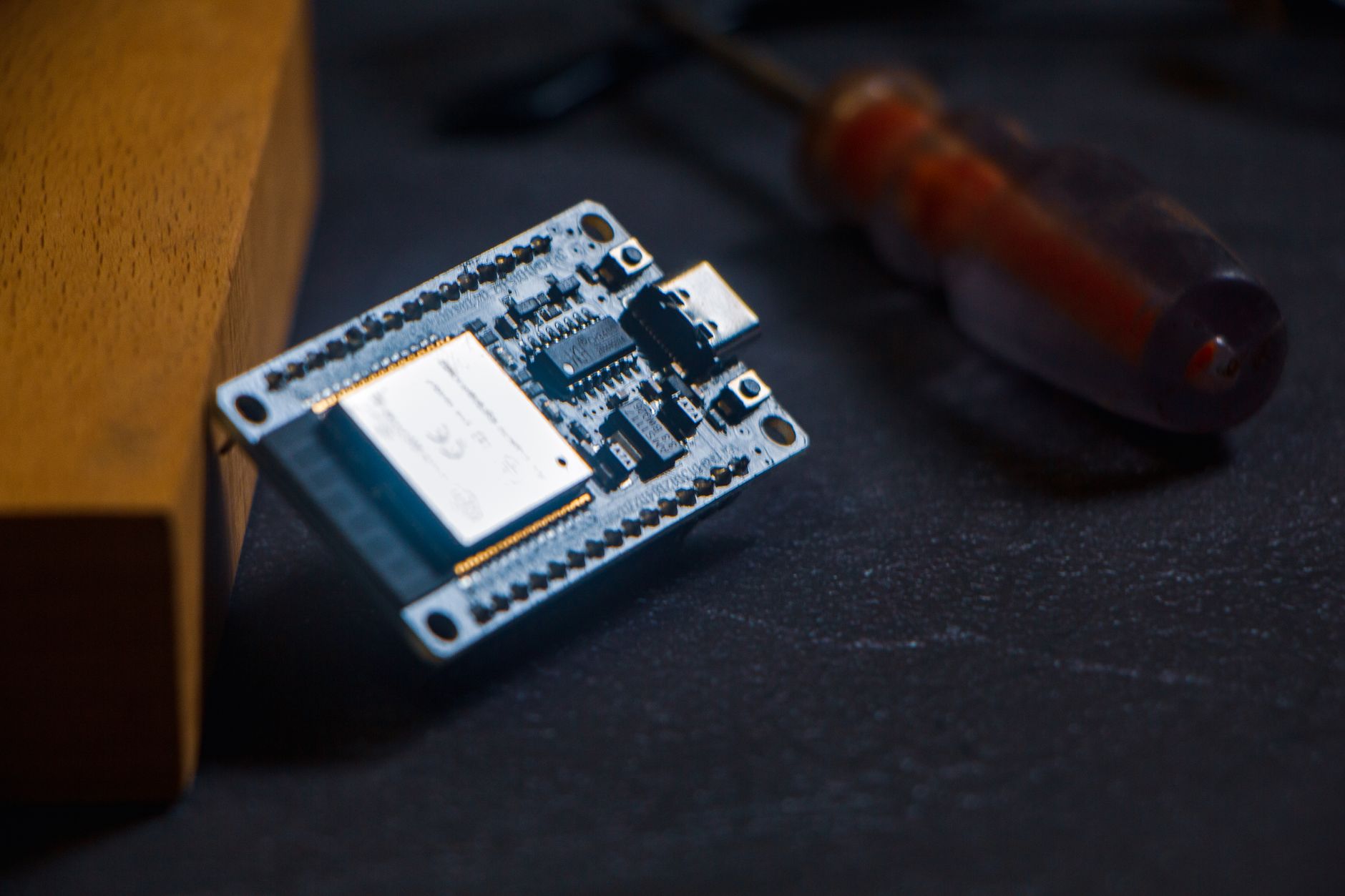
Beyond Nvidia: Tech Giants Build Custom AI Chips as Hazy Secures $6M for Data Synthesis
Data synthesis startup Hazy, co-founded by Harry Keen, Luke Robinson, and James Arthur, secured $6 million in a funding round in June 2022 from investors including AlbionVC and M&G Investments Business Insider, 2022. This investment highlights continued capital flow into specialized AI solutions, even as major tech companies like OpenAI, Google, and Amazon aggressively design their own custom AI chips to challenge Nvidia's market dominance and optimize their foundational models TechCrunch, 2024. Founders in the AI space must understand this dual trend: the immense strategic investment by tech giants into core infrastructure, and the opportunities for startups to build critical, specialized layers within the broader AI ecosystem.
Quick Takeaways
- Custom Silicon Ascendant: Major tech companies like OpenAI, Google, Amazon, Meta, Microsoft, Tesla, and SpaceX are designing their own custom AI chips to improve efficiency, reduce costs, and tailor performance for their unique AI models TechCrunch, 2024.
- Nvidia's Enduring Dominance, Emerging Pressure: Nvidia maintains a dominant position with its general-purpose GPUs, but high demand, supply constraints, and elevated prices are fueling the shift towards custom alternatives TechCrunch, 2024.
- ASICs Offer Tailored Efficiency: Application-Specific Integrated Circuits (ASICs) provide superior performance per watt and per dollar for specific workloads compared to general-purpose GPUs, demonstrated by Google's TPUs and Amazon's Trainium/Inferentia TechCrunch, 2024.
- Specialized AI Startups Attract Capital: While the custom chip race is dominated by giants, startups like Hazy, a data-synthesis provider, are securing significant capital by addressing critical, adjacent needs such as data privacy and synthetic data generation Business Insider, 2022.
The Custom Silicon Imperative: Why Tech Giants Are Building Their Own AI Chips
The landscape of AI infrastructure is undergoing a fundamental shift, driven by the escalating computational demands of large language models and other sophisticated AI applications. Major technology companies, previously reliant on external hardware providers, are now investing heavily in designing their own custom Application-Specific Integrated Circuits (ASICs) tailored specifically for AI workloads. This strategic pivot is not merely about incremental improvements; it represents a comprehensive effort to gain competitive advantage, control costs, and optimize performance at the foundational level of AI computing TechCrunch, 2024.
Companies like OpenAI, the developer of advanced generative AI models, are at the forefront of this movement. Their motivation stems from the necessity to train and run increasingly complex models more efficiently. General-purpose GPUs, while powerful, are not always perfectly optimized for the specific matrix multiplication and tensor operations that define AI workloads. By designing custom chips, OpenAI aims to achieve a level of hardware-software co-design that can unlock new performance ceilings and reduce the exorbitant costs associated with AI model development and deployment TechCrunch, 2024.
Google, a pioneer in AI research, has long recognized this imperative with its Tensor Processing Units (TPUs). First introduced in 2016, Google's TPUs are prime examples of custom ASICs designed to accelerate machine learning workloads. These chips power Google's own AI services and are also available to external customers via Google Cloud, showcasing a vertically integrated strategy where hardware innovation directly feeds into service offerings. Amazon followed suit with its Trainium and Inferentia chips, developed for training and inference of deep learning models on AWS. Meta, the parent company of Facebook, has also unveiled its MTIA (Meta Training and Inference Accelerator) chips, specifically designed to handle the scale and unique demands of its social media and metaverse AI initiatives TechCrunch, 2024.
Beyond these traditional tech giants, companies like Microsoft, Tesla, and SpaceX are also actively engaged in custom chip development. Microsoft's efforts are geared towards enhancing its Azure cloud AI capabilities and powering its various AI-driven products. Tesla, known for its electric vehicles and autonomous driving technology, designs its own Full Self-Driving (FSD) chips to provide the necessary compute power for real-time AI inference in its vehicles, a critical component for safety and performance. SpaceX, while perhaps less obvious, uses custom hardware for highly specialized tasks related to rocket telemetry, satellite communication, and other aerospace applications where off-the-shelf solutions may not meet stringent performance or power efficiency requirements TechCrunch, 2024. These diverse applications underscore a common theme: the need for hardware specifically engineered to excel at unique, demanding AI tasks, ultimately leading to improved efficiency, reduced operational costs, and tailored performance that general-purpose hardware cannot match TechCrunch, 2024.
Nvidia's Reign and the Pressure Points Driving Alternatives
Nvidia has long held a dominant position in the AI chip market, largely due to its early investment in general-purpose Graphics Processing Units (GPUs) and the CUDA programming platform. Its GPUs, such as the H100, have become the de facto standard for training and deploying complex AI models across various industries and research institutions TechCrunch, 2024. The flexibility and broad applicability of Nvidia's GPUs have made them indispensable tools for AI developers, providing the raw compute power necessary for the parallel processing demands of deep learning. This dominance has translated into significant market share and revenue for Nvidia, establishing it as a critical bottleneck in the AI supply chain.
However, this very dominance is now creating pressure points that are fueling the development of alternatives. The unprecedented surge in demand for AI chips, particularly high-end GPUs like the H100, has led to significant supply constraints across the industry TechCrunch, 2024. Companies seeking to expand their AI capabilities often face long lead times and limited availability, hindering their ability to scale operations and innovate quickly. This scarcity has, in turn, driven up prices, making Nvidia's GPUs an increasingly expensive component of AI infrastructure. For major tech companies operating at hyperscale, these costs can quickly become prohibitive, impacting their bottom line and strategic planning TechCrunch, 2024.
The economic rationale for developing custom chips becomes clear in this context. While the upfront investment in chip design and manufacturing is substantial, the long-term benefits of reduced per-unit cost, improved efficiency, and guaranteed supply can outweigh the initial expenditure for companies with massive AI infrastructure needs. By owning the chip design, these companies can also ensure a stable and predictable supply chain, mitigating the risks associated with external dependencies and market fluctuations. This strategic independence is crucial for maintaining competitive edge in a rapidly evolving AI landscape.
Furthermore, general-purpose GPUs, by their nature, are designed to handle a wide array of computational tasks. While this versatility is beneficial for many applications, it also means they may not be optimally efficient for every specific AI workload. Custom ASICs, on the other hand, can be meticulously engineered to accelerate particular AI operations, leading to superior performance per watt and per dollar for those specific tasks TechCrunch, 2024. This specialization allows companies to extract maximum performance from their hardware, directly impacting the speed of model training, the efficiency of inference, and ultimately, the cost-effectiveness of their AI operations. Nvidia's continued innovation means it will remain a formidable player, but the economic and performance pressures are undeniably pushing the largest AI consumers towards internal hardware solutions.
ASIC vs. GPU: Performance and Economic Differentiation
The core of the AI hardware race lies in the fundamental architectural differences between general-purpose GPUs and Application-Specific Integrated Circuits (ASICs). Understanding these distinctions is crucial for founders to grasp the direction of the industry and identify potential opportunities. Nvidia's dominance is built on its GPUs, which are highly flexible parallel processors. These chips excel at a wide range of tasks, from graphics rendering to scientific simulations and, crucially, the parallel computations required for deep learning. Their versatility means a single GPU can be repurposed for various workloads, making them a popular choice for research and development where requirements are still evolving TechCrunch, 2024.
However, this versatility comes with a trade-off in specialized efficiency. An ASIC, by definition, is designed for a single, specific purpose. In the context of AI, this means an ASIC can be engineered from the ground up to execute the precise mathematical operations (like matrix multiplications and convolutions) that are most common in AI models, and nothing else. This dedicated design allows for significant optimizations in terms of power consumption, computational speed, and overall cost for that specific workload. The result is often superior performance per watt and per dollar when compared to a general-purpose GPU performing the same specialized task TechCrunch, 2024.
Concrete examples illustrate this differentiation. Google's Tensor Processing Units (TPUs) are perhaps the most well-known custom ASICs for AI. Google developed TPUs specifically to accelerate the TensorFlow framework and its deep learning models. These chips are optimized for both training and inference, providing a significant boost in performance and efficiency for Google's internal services and cloud customers TechCrunch, 2024. Similarly, Amazon's Trainium and Inferentia chips are purpose-built for AI workloads on AWS. Trainium focuses on efficient model training, while Inferentia is optimized for high-performance, low-cost inference. Meta's MTIA chips follow the same philosophy, targeting the unique demands of its large-scale AI models for social media content ranking, recommendation systems, and metaverse applications TechCrunch, 2024.
The economic implications are substantial. For companies operating at the scale of Google or Amazon, even marginal improvements in efficiency per chip translate into billions of dollars in savings over time, both in hardware procurement and operational costs (like electricity and cooling). This cost advantage, combined with the ability to tailor hardware precisely to their software stacks, creates a powerful incentive for these tech giants to invest in custom silicon. For founders, this means understanding that while GPUs remain vital, the cutting edge of AI efficiency, especially at scale, is moving towards highly specialized, custom hardware. This trend opens up opportunities for startups to build software layers, optimization tools, or even niche hardware that can bridge the gap between diverse hardware architectures or cater to specific, underserved AI workloads.
Hazy's Niche: Data Synthesis and the Broader AI Ecosystem
While the custom AI chip race is primarily a domain for tech giants with vast resources, the broader AI ecosystem continues to present significant opportunities for startups. Hazy, a data-synthesis startup, exemplifies how specialized solutions addressing critical AI-related challenges can attract substantial investment, even if they aren't directly building silicon. In June 2022, Hazy, co-founded by Harry Keen, Luke Robinson, and James Arthur, successfully raised $6 million in a funding round with participation from AlbionVC and M&G Investments Business Insider, 2022. This capital infusion was earmarked for the development of technology that generates synthetic data, directly addressing growing concerns around data privacy.
Hazy's solution tackles a pervasive problem in AI development: the need for vast quantities of data for training models, often clashing with stringent privacy regulations like GDPR and CCPA. By creating synthetic data—statistically representative but entirely artificial datasets—Hazy enables companies to develop and test AI models without exposing sensitive real-world information. This capability is crucial for industries handling highly confidential data, such as finance and healthcare. For instance, Hazy’s technology could allow a bank like Nationwide Building Society or RBS to train fraud detection models using synthetic customer transaction data, or a healthcare provider like the NHS to develop diagnostic AI without compromising patient privacy Business Insider, 2022.
The founders of Hazy bring diverse backgrounds to the table. Harry Keen, as CEO, has experience in product and business development, previously working at companies like Vodafone. Luke Robinson, the CTO, has a strong technical background with a Ph.D. in Computer Science from UCL and research focused on machine learning and data privacy. James Arthur, the Chief Science Officer, also holds a Ph.D. from UCL, specializing in probabilistic modeling and Bayesian inference, foundational to synthetic data generation. This combination of business acumen and deep technical expertise is a common thread among successful deep tech startups. Their ability to articulate a clear market gap—the conflict between data utility and data privacy—and propose a robust technical solution resonated with investors like AlbionVC, a venture capital firm with a history of backing enterprise software companies, and M&G Investments, a global asset manager Business Insider, 2022.
Hazy's success underscores that while large-scale infrastructure battles are fought by giants, myriad opportunities exist for startups to innovate in specific, high-value areas within the broader AI lifecycle. From data preparation and governance to model deployment and monitoring, each stage presents challenges that require specialized solutions. Founders should look for these crucial "picks and shovels" opportunities that support the overall AI gold rush, rather than attempting to compete directly with the computational powerhouses.
Implications for AI Founders: Navigating a Dual-Track Landscape
The current AI landscape presents a dual-track reality for founders: on one hand, a capital-intensive race by tech giants to control the foundational hardware layer; on the other, a burgeoning ecosystem of software and specialized services built atop this evolving infrastructure. For founders, understanding this dichotomy is crucial for identifying viable market opportunities and developing sustainable business models. Direct competition with companies like Google or Amazon in custom chip design is generally not feasible for a startup due to the immense capital, talent, and manufacturing complexity involved. However, the very existence of these custom chips creates new avenues for innovation.
One key implication is the growing fragmentation of the AI hardware stack. As more custom ASICs emerge (TPUs, Trainium, MTIA), the software layer needs to become more adaptable. This creates opportunities for startups developing tools, frameworks, and middleware that can abstract away hardware complexities, allowing AI developers to deploy models efficiently across diverse silicon architectures. Companies building compilers, optimization engines, or specialized runtime environments that can take advantage of the unique features of different ASICs could find significant traction. The goal would be to maximize performance on custom hardware without requiring developers to rewrite their models for each chip.
Another area of opportunity lies in specialized AI applications that leverage these powerful new chips. As the cost of raw compute becomes more efficient for specific workloads (thanks to ASICs), highly complex or previously unfeasible AI applications become economically viable. Founders could focus on niche verticals that require extreme computational efficiency, such as advanced scientific simulations, hyper-personalized recommendation engines, or real-time edge AI processing, where the benefits of custom silicon are most pronounced. This means building solutions that are not just "AI-powered" but are fundamentally dependent on the next generation of AI compute.
Furthermore, the operational challenges associated with managing vast AI infrastructures are increasing. Startups offering solutions for AI model observability, performance monitoring across heterogeneous hardware, resource scheduling, or cost optimization for large-scale AI deployments will be in high demand. These "AI Ops" tools help companies effectively manage their expensive and complex AI hardware investments, regardless of whether they are using Nvidia GPUs or custom ASICs.
Finally, the example of Hazy highlights the importance of focusing on critical adjacent problems within the AI lifecycle, such as data privacy, data governance, or synthetic data generation Business Insider, 2022. These are problems that even the largest tech companies face, and they often prefer to buy specialized solutions rather than build them in-house. Founders should look for areas where their deep expertise can solve specific, high-value pain points that are universal across the AI industry, regardless of the underlying hardware. The shift to custom silicon is not an end, but a catalyst for a new wave of innovation across the entire AI stack.
FAQ
Q1: Why are major tech companies developing their own AI chips instead of relying solely on Nvidia?
Major tech companies such as OpenAI, Google, Amazon, Meta, Microsoft, Tesla, and SpaceX are developing custom AI chips primarily to improve efficiency, reduce costs, and achieve specific performance tailored to their unique AI models TechCrunch, 2024. High demand for Nvidia's general-purpose GPUs like the H100 has led to supply constraints and high prices, further incentivizing companies to seek custom, more cost-effective, and optimized alternatives TechCrunch, 2024.
Q2: What is the main difference between general-purpose GPUs and custom ASICs for AI?
General-purpose GPUs, like Nvidia's H100, are versatile processors designed to handle a wide range of computational tasks, including AI workloads. Custom Application-Specific Integrated Circuits (ASICs), on the other hand, are designed from the ground up to perform a single, specific function or a narrow set of functions, such as accelerating particular AI operations TechCrunch, 2024. This specialization allows ASICs to offer superior performance per watt and per dollar for their intended workloads compared to more flexible GPUs TechCrunch, 2024. Examples include Google's TPUs and Amazon's Trainium and Inferentia TechCrunch, 2024.
Q3: How does Hazy, a data-synthesis startup, fit into the broader AI infrastructure discussion?
Hazy, a data-synthesis startup that raised $6 million in June 2022, addresses a critical adjacent challenge in the AI ecosystem: data privacy [Business Insider, 2022](https://news.google.com/rss/articles/CBMitwFBVV95cUxPeHJsR2ZsQ1JsbTJ0UTlGemh0cVIwaWdCOFN4MndhOFdobkhoZndnMHJtaUlRRzJyLWU4S3pVOE5ycF8wV3p6NTFwZFpWdFlkYU9LQzUwOGR0Znhtc0M2QnFuTFI3UVFpNDEyV1JxTlc5WUZaNG
Reader questions.
About “Tech Giants Build Custom AI Chips, Hazy Secures $6M And Specialized AI Startups Thrive” — five of the most-asked, in the desk's own words.
01Why are major tech companies building custom AI chips?
Tech giants like OpenAI, Google, and Amazon are designing custom AI chips (ASICs) to improve efficiency, reduce costs, tailor performance for their unique AI models, and gain a competitive advantage over general-purpose GPUs like Nvidia's.02How do custom AI chips (ASICs) compare to general-purpose GPUs?
ASICs, such as Google's TPUs or Amazon's Trainium/Inferentia, offer superior performance per watt and per dollar for specific AI workloads. They are tailored for tasks like matrix multiplication, making them more efficient than general-purpose GPUs for AI.03Is Nvidia's dominance in AI chips being challenged?
Yes, while Nvidia still dominates, high demand, supply constraints, and elevated prices for its GPUs are fueling a shift. Major tech companies are now developing custom alternatives to reduce reliance on Nvidia and optimize their own AI infrastructure.04What opportunities exist for AI startups amidst the custom chip race?
Despite tech giants building core AI infrastructure, specialized AI startups like Hazy are attracting capital. They address critical, adjacent needs such as data privacy, synthetic data generation, and other niche solutions within the broader AI ecosystem.05What is Hazy, and why did it secure funding?
Hazy is a data synthesis startup that secured $6 million. It provides specialized AI solutions like data privacy and synthetic data generation. Its funding highlights continued investment in startups addressing critical, specialized layers within the AI ecosystem.